I have been a fan of The Baking Company ever since I shifted to Baroda. The owner – Aparna Parikh, is a very friendly and sweet lady. She used to be a software engineer and programmer in the past, and she quit her job, to open up her own little venture – The Baking Company, which by no means is little anymore. Growing from the small, cute shop with those lovely brick interiors at Manisha Chowkdi, to the larger shop beside D-Mart in Vasna, the shop has surely come a long way, and as would have Aparna.

I keep trying anything and everything that catches my eye here. And today it is a blend of different flavors. With the mango season going on when I visited, I take a Mango Delight. I have a huge thing for Red Velvet and Tiramisu. So, I settle for a Red Velvet with Butter Cream frosting cup cake and a Tiramisu pastry. And I also take a Chocolate macaron. Obviously, I love macarons.

The Mango Delight is amazing. Not overly Mango-ey that would make you go sick, and not that typical synthetic flavor that will make you regret your purchase decision. Just the right amount of natural, real mango. The pastry has Mango cake as well as chopped Mango pieces in it. Dressed beautifully with Mango cream frosting, this pastry steals my heart as the mango melts in my mouth. Super love it. I definitely wish I could get it all year round, but alas the constraints of the seasons.

Next, I dig into the Tiramisu- layers of cake and cream, with a dash of coffee flavor and cocoa dustings on the top. The Tiramisu is soft, and the layers look distinctively beautiful. Each layer comes with its own dash of flavor. The Tiramisu is a right blend of sweetness of the cream and the bitterness of coffee & chocolate cake, neither flavor overpowering the other and giving a perfect balance in every bite. It is nicely presented in a separate tray of its own so you can have it on the go, even when you don’t have a plate. The cocoa dusting on the top, not only makes the Tiramisu look extra beautiful, but also more delicious and tempting.

Most accounts of the origin of tiramisu date its invention to the 1960s in the region of Veneto, Italy, at the restaurant “Le Beccherie” in Treviso, Italy. Specifically, the dish is claimed to have first been created by a confectioner named Roberto Linguanotto, owner of “Le Beccherie” and his apprentice, Francesca Valori, whose maiden name was Tiramisu. Some debate remains, however. Accounts by Carminantonio Iannaccone claim the tiramisu sold at Le Beccherie was made by him in his bakery, created by him on 24 December 1969. Other sources report the creation of the cake as originating towards the end of the 17th century in Siena in honour of Grand Duke Cosimo III. Regardless, recipes named “tiramisu” are unknown in cookbooks before the 1960s and the Italian-language dictionary Sabatini Coletti traces the first printed mention of the word to 1980, while Merriam-Webster’s Online Dictionary gives 1982 as the first mention of the dessert.

Tiramisu may have originated as a variation of another layered dessert, Zuppa Inglese. It is mentioned in Giovanni Capnist’s 1983 cookbook I Dolci Del Veneto. Among traditional pastry, tiramisu also has similarities with many other cakes, in particular with the Charlotte, in some versions composed of a Bavarian cream surrounded by a crown of ladyfingers and covered by a sweet cream; the Turin cake (dolce Torino), consisting of ladyfingers soaked in rosolio and alchermes with a spread made of butter, egg yolks, sugar, milk, and dark chocolate; and the Bavarese Lombarda, which is similar in the preparation and the presence of certain ingredients such as ladyfingers and egg yolks (albeit cooked ones). In Bavarese, butter and rosolio (or alchermes) are also used, but not mascarpone cream nor coffee.

The Red Velvet cup cake with Butter Cream frosting, was my most favorite delight from the four I ordered this time. IT has always been. Nothing beats the Red Velvet. The cup cake is moist, soft and spongy. It hasn’t dried up like a lot of cup cakes and muffins tend to, especially chocolate and red velvet ones. It tastes delicious. And the butter cream frosting makes is like a cherry on top. The very slightly crunchy smoothness of the butter cream with the gentle sprinkle of sugar on top, adds that wow factor in an otherwise excellently created and executed cup cake. I could gobble down a whole box full of it, I am sure. They could introduce a bite size version, and I am sure a lot of us would just munch it down like popcorn, because that’s how delicious it is.

James Beard’s reference, American Cookery (1972), describes three red velvet cakes varying in the amounts of shortening, butter, and vegetable oil. All used red food coloring, but the reaction of acidic vinegar and buttermilk tends to better reveal the red anthocyanin in cocoa and keeps the cake moist, light, and fluffy. This natural tinting may have been the source for the name “red velvet”, as well as “Devil’s food” and similar names for chocolate cakes. Contemporarily, chocolate has often undergone Dutch processing, which prevents the color change of the anthocyanins.

When foods were rationed during World War II, bakers used boiled beet juices to enhance the color of their cakes. Beets are found in some red velvet cake recipes, where they also serve to retain moisture. Adams Extract, a Texas company, is credited with bringing the red velvet cake to kitchens across America during the Great Depression era, by being one of the first to sell red food coloring and other flavor extracts with the use of point-of-sale posters and tear-off recipe cards. The cake and its original recipe are well known in the United States from New York City’s famous Waldorf-Astoria Hotel, which has dubbed the confection Waldorf-Astoria cake. However, it is widely considered a Southern recipe. Traditionally, red velvet cake is iced with a French-style butter roux icing (also called ermine icing), which is very light and fluffy, but time-consuming to prepare. Cream cheese frosting and butter cream frosting are variations which have increased in popularity.
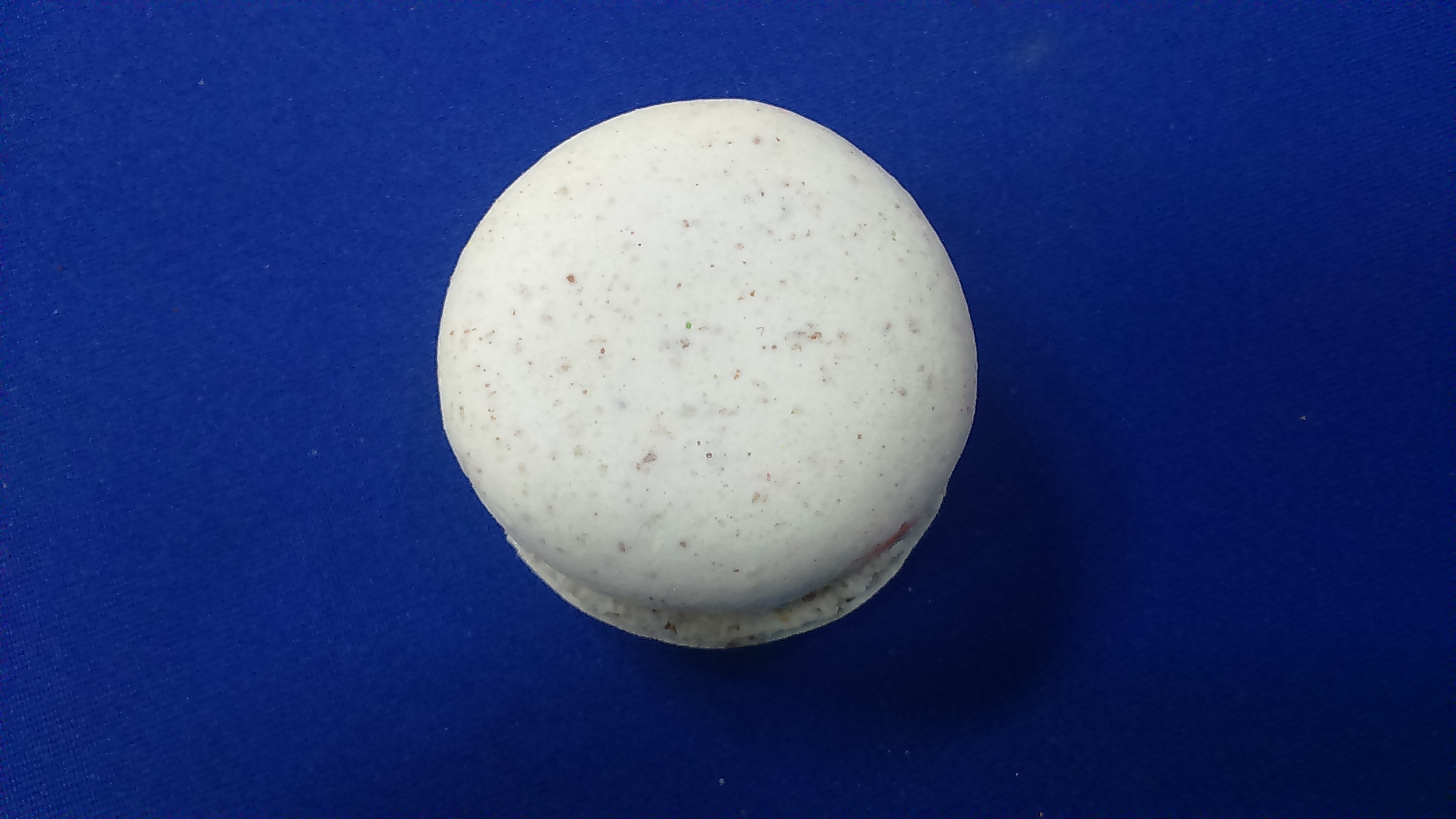
And now, the chocolate macaron. A macaron is a French sweet meringue-based confection made of egg white, icing sugar, granulated sugar, almond powder/ground almond, and some food coloring and flavoring. The macaron is commonly filled with ganache, butter cream or jam filling sandwiched between two cookies. The name is derived from the Italian word macarone, maccarone or maccherone, the meringue.
Macarons have been produced in the Venetian monasteries since the 8th century A.D. During the Renaissance, Catherine de’ Medici’s Italian pastry chefs whom she brought with her in 1533 upon marrying Henry II of France arrived in France. Larousse Gastronomique cites the macaron created in 1791 in a convent near Cormery. In 1792, macarons began to gain fame when two Carmelite nuns, seeking asylum in Nancy during the French Revolution, baked and sold the macaron cookies in order to pay for their housing. These nuns became known as the “Macaron Sisters”. In these early stages, macarons were served without special flavors or fillings. It was not until the 1830s that macarons began to be served two-by-two with the addition of jams, liqueurs, and spices. The macaron as it is known today, composed of two almond meringue discs filled with a layer of buttercream, jam, or ganache filling, was originally called the “Gerbet” or the “Paris macaron.” Pierre Desfontaines of the French pâtisserie Ladurée has sometimes been credited with its creation in the early part of the 20th century, but another baker, Claude Gerbet, also claims to have invented it. French macaron bakeries became trendy in North America in the 2010s. The city of Montmorillon is well known for its macarons and has a museum dedicated to it. The Maison Rannou-Métivier is the oldest macaron bakery in Montmorillon, dating back to 1920. The traditional recipe for Montmorillon macarons remains unchanged for over 150 years.
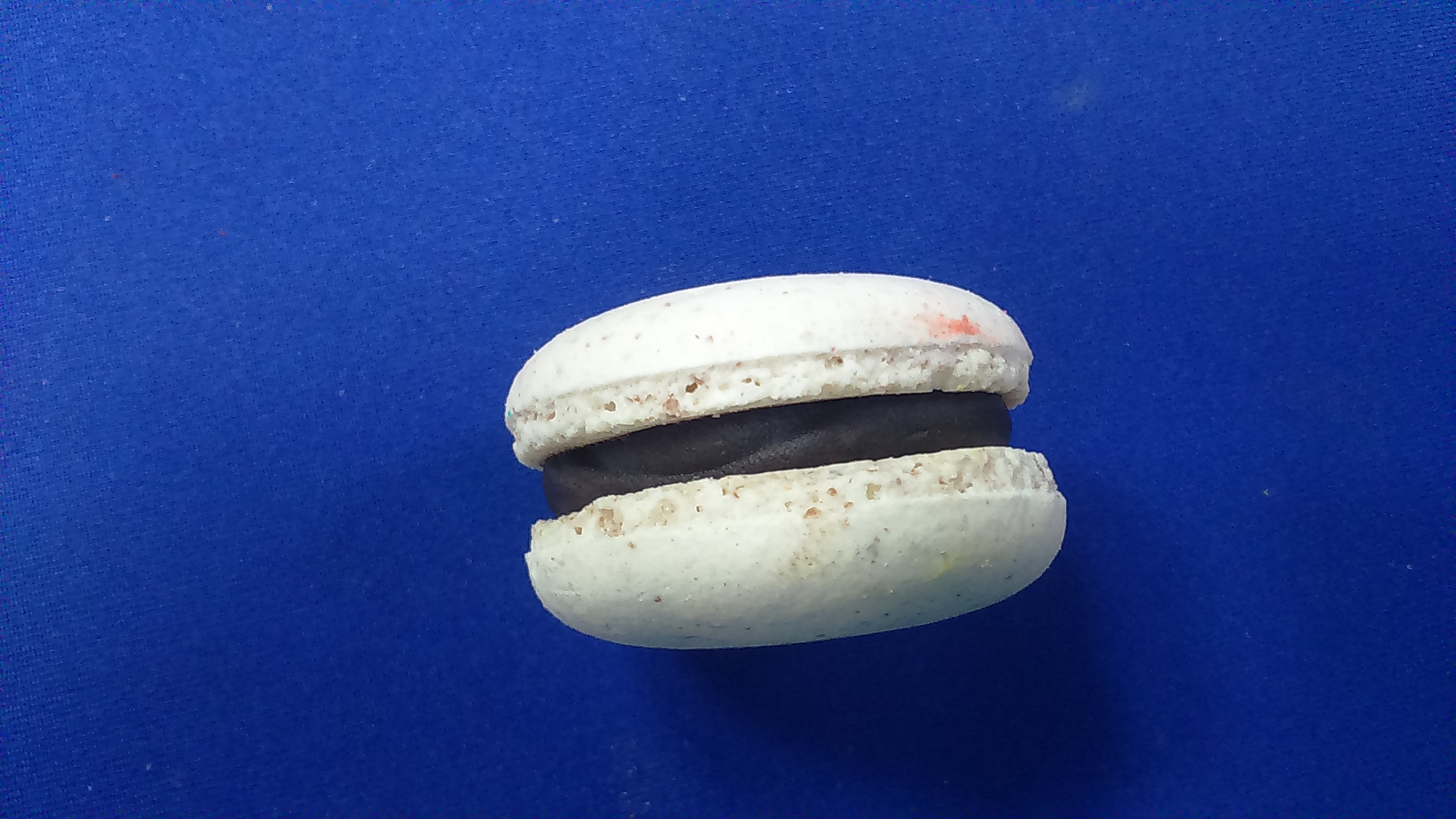
The chocolate macaron that I am having at The Baking Company, is delicious. For me, it has always been a mystery how the two cookies manage to be completely hollow, what creative baking technique would that be. The macaron is small and cute, but that by no means influences how delicious it is. I could take it in, in one bite, but I prefer to take in small bites so as to relish it for a longer while. The Macaron, needless to say, is just perfect.
Overall, I leave a satisfied customer as I step out of the door of The Baking Company.
Bhavi’s report card –
Taste: 9
Service: 9
Ambience: 9
Value for money: 9

 Banjaran Foodie